
2024 Replacement of Ditch and Restoration
Restoration project in detail
Paul Levick
11/13/20257 min read
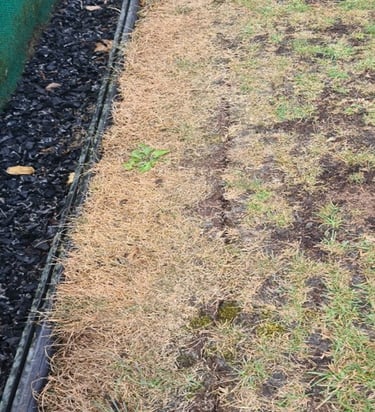
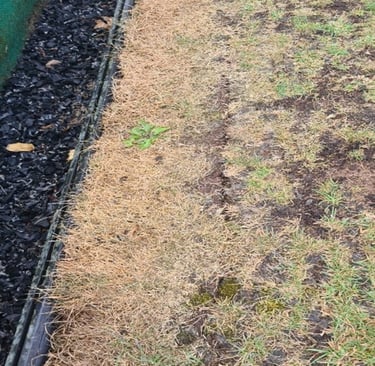
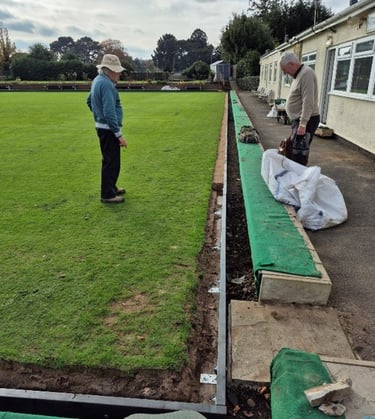
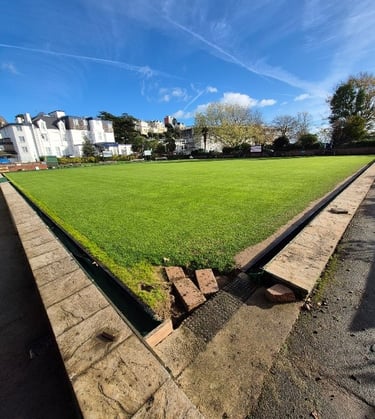
During the playing season 2024 several issues came to light with the bowling green edge and support. In several areas, the plastic decking boards had been pushed over to almost 45 degrees, bowls were unable to leave the green and were getting wedged against the plastic board. (Fig 1 & 2) Remedial work was carried out at the time to ensure the playing area was true but clearly there was a problem. On further investigation it was discovered that all four ditches were in urgent need of replacement in the closed season. The photos also show that the grass 6 inches closest to the edge always died back very quickly even though watered along with the rest of the green.
Green Renovation Project Autumn 2024
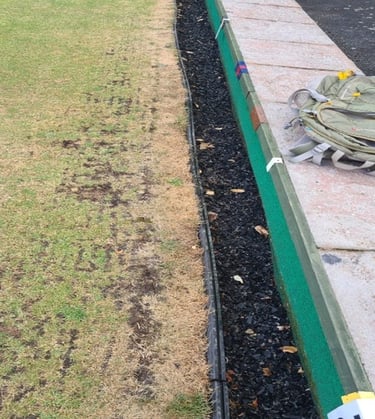
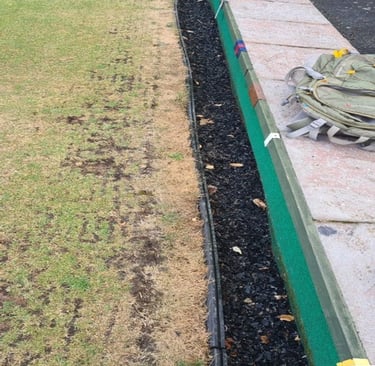
The Autumn renovation was carried out on 30 Sep 24. Post this work it was agreed with Max Sandford to dig out an area close to where the mowers etc are moved on and off the green. This gave a view of the current edge set up and provided the information required to fit a new green edge surround. Prior to removal of the boards etc, all the old rubber ditch content was removed, the green cover pulled back and the stones pushed away from the boards to allow access.
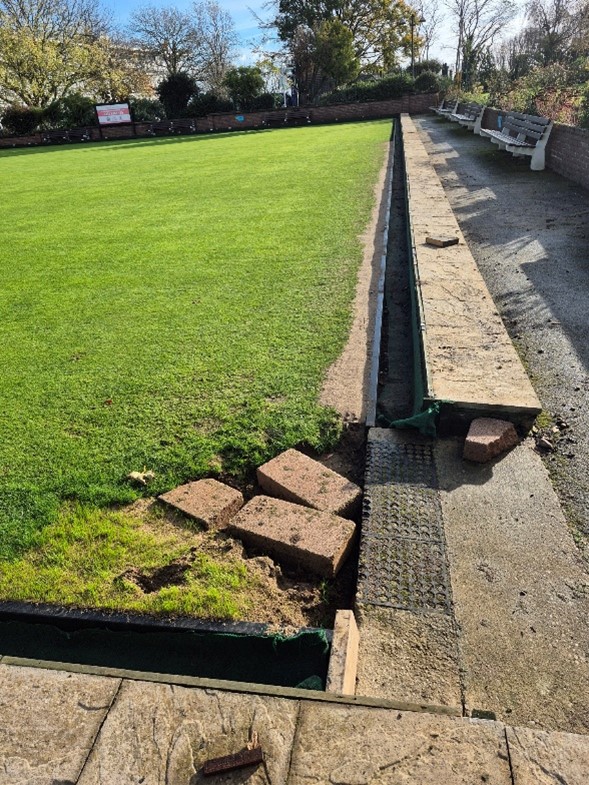
The photos (Fig 3 & 4) show how the old ditch edge had been put in place.
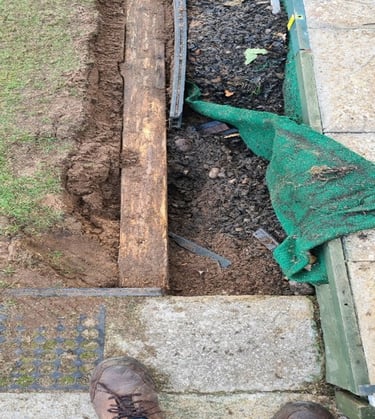
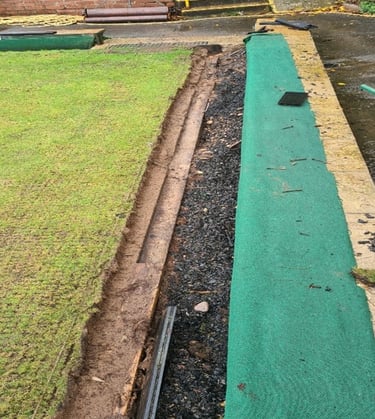
Fig 1
4-inch x 2-inch planks of 4.8-meter lengths had been bolted to the concrete. Then the 6-inch decking boards had been screwed into the 2-inch wood that was secured to the concrete.
As shown in Fig 3 above the boards had separated from the wooden support and in several places had failed completely. The wooden planks were generally still intact but were soft having been under the soil for a considerable amount of time. Fortunately, a concrete footing had been laid all around the green at a depth of 8 - 10 inches below the surface of the green. Generally, this was found to be in good condition. Several areas required concrete patching to ensure a sufficient base for the new fixings.
It was agreed to remove all the boards and planks from around the green and renovate all ditch edges at the same time. The removal was carried out over several days. A 20 cm section of turf was removed. (Fig 5) the 2 inches containing grass and roots were discarded. The remaining soil was kept in dumpy bags around the green to be use later the reseeding element of the project.
Fig 6 shows the decking boards, wood and soil removed leaving the flat concrete surface..
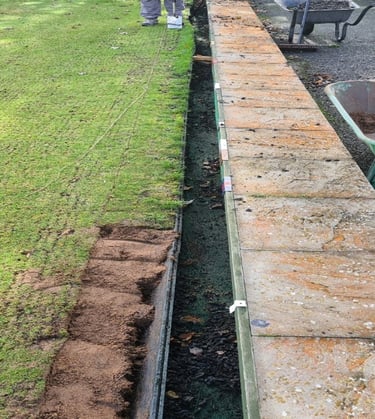
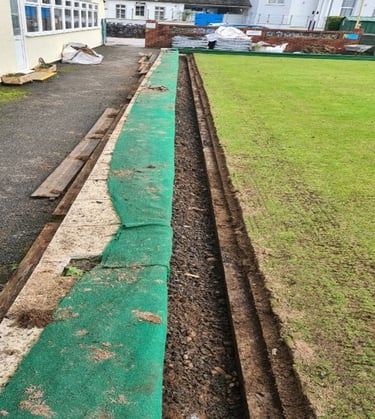
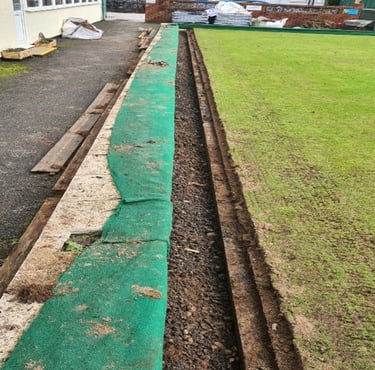
Fig 5 Fig 6
As the concrete footings were in such a good condition the plan was to utilise large wooden boards 8-inch x 2 inch 4.8 meters in length bolted to metal supporting brackets which were fixed to the concrete base. As the overall edge length was 148 meters, 31 lengths were ordered and delivered by Bradfords. To further protect the boards, (C24 pretreated wood), all lengths had an additional coat of black bitumen paint applied to them prior to being bolted into place. The photo at Fig 9 shows some of the boards post painting and drying in the Autumn sun.
The waste was placed in two skips, one for general (plastic waste) and the other for soil

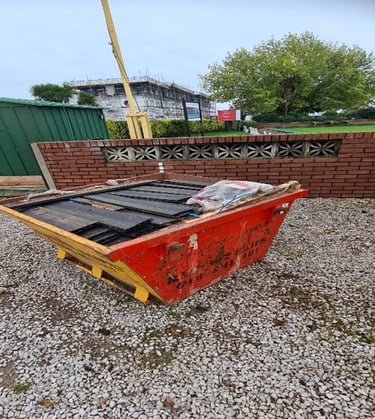
Fig 8
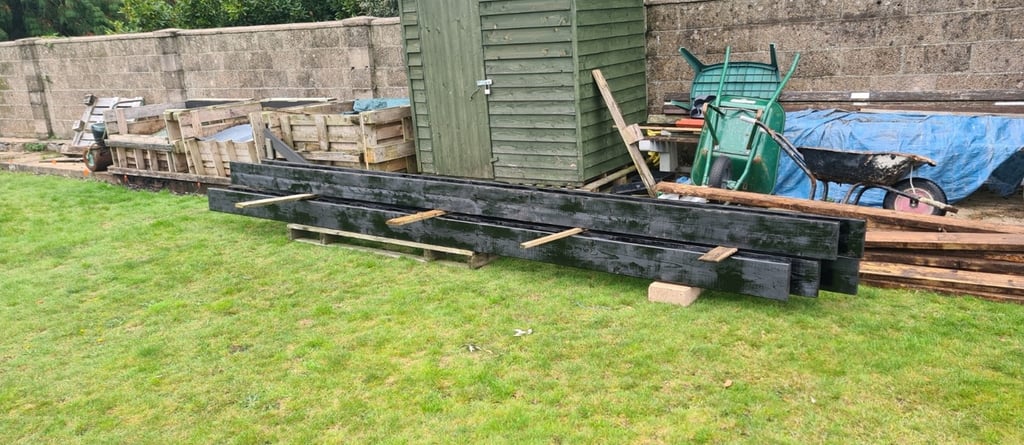
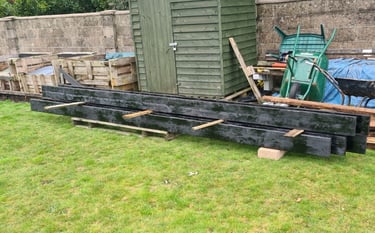
Fig 10 below shows the 90 x 90 x 65 mm reinforced bracket used to secure the wooden boards to the concrete. Forstrength and stability these brackets were secured to the concrete at one-meter intervals around the green edge.
The brackets were fixed using screw bolts 8 mm x 75 mm with washers to add stability. Carriage bolts M10 x 65mm were used to secure the bracket to the beam, again a washer was used on the inside to support the nut and reduce it cutting into the board.
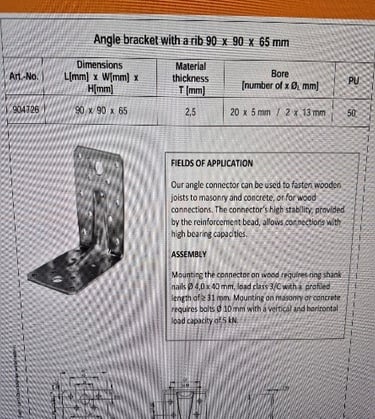

Fig 10 Fig 11
Fig 9
Alignment of the ditch board fixing brackets
To arrive at the final fixing of the new boards in as straight a line as possible on each of the 4 green side was not simple. The concrete ditch foundations were not straight and true. By using a tight line, a straight edge was achieved whilst accommodating the imperfections in the straightness of the concrete foundations over each 40-meter green edge. As the brackets now bolted into the concrete foundation were fixed using an adjustable slot, it was possible to align each bracket precisely to sit on the tight string line before finally tightening the concrete fixing bolts. The brackets were now fixed and ready to receive the new ditch boards.

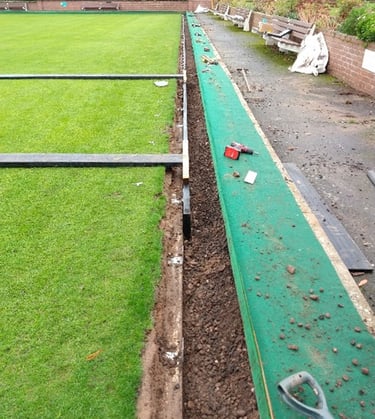
Fig 12
Fig 13
Marking and Drilling the Board
With the ditch board now suspended precisely in position by the jig (Fig 13), the precise marking and drilling of the 10.5 mm fixing hole in the ditch board was done by a sharp point through the steel fixing bracket which resulted in a 10 mm circle scored in the ditch board. (Fig 14 & 15). The ditch board was then removed from the jig for drilling. Because the 10.5 mm drill would be difficult to initially control during drilling (remember trying to preserve the 3 mm accuracy) the first accurate pilot drilling was carried out using a 4.5 mm drill. Following the drilling of this pilot hole the final 10.5 mm hole was accurately drilled. (Fig 16).
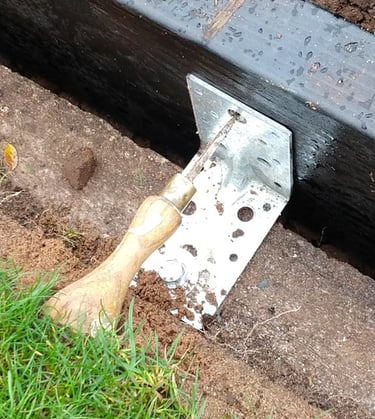
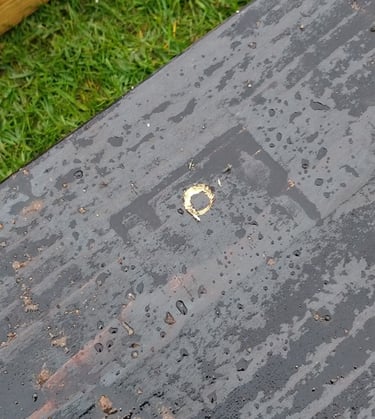
Fig 15

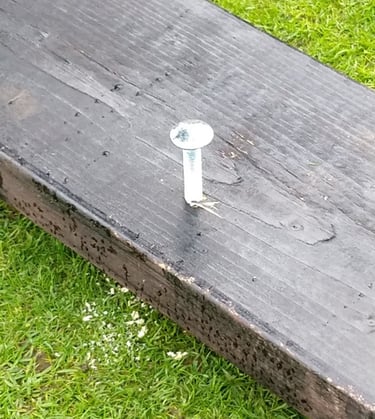
Fitting of 10 mm coach bolts to the ditch boards and final fitting to the ditch brackets
The 10 mm coach bolts were now hammered through the drilled timbers (Fig 17 above) (with rubber mallet) this tight fit being essential to preserve the 3-millimeter accuracy required. With all the 5 bolts in the ditch board now tightly in place, it was then presented back to the ditch fixing brackets that it had been marked against. Because of the care taken to precisely mark and drill the boards, the bolts now lined up precisely with the brackets and the final fixings with M10 washers and nuts were carried out tightening the bolts such that the coach bolt heads visibly pulled slightly into the wood on the outside. (Fig 21).
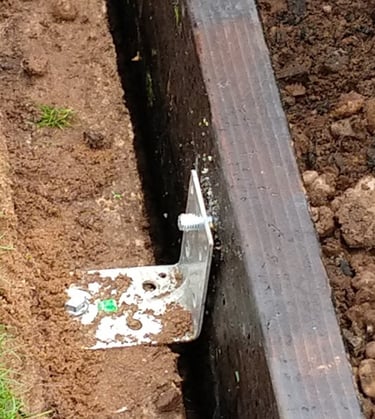
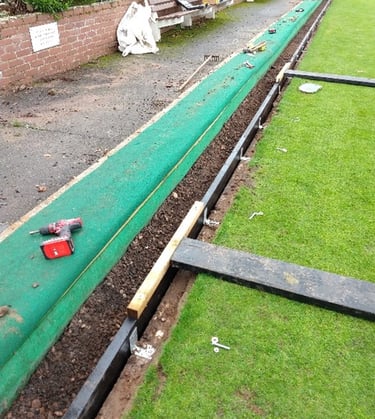
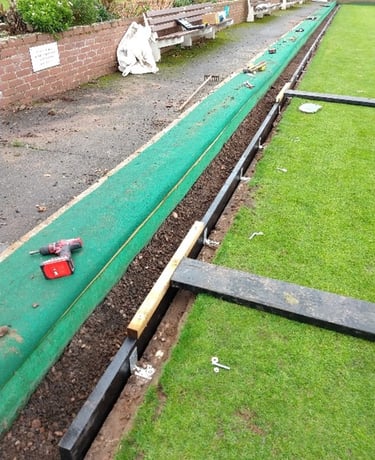
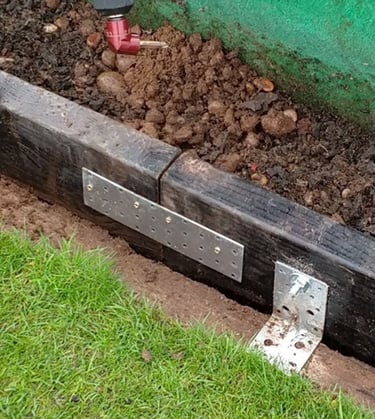
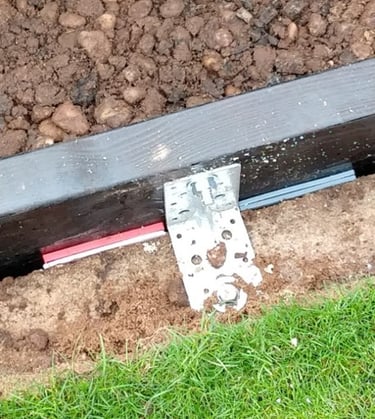
Once the boards were bolted in place, to add additional stability metal plates were screwed over the join as shown above (Fig 20). All boards around the green were secured this way. Fig 20 also shows a gap between the board and the concrete, it was found that due to the concrete not being level a gap between 2 mm and 15 mm was present between the board and the concrete edge after the board had been fixed. To greatly improve stability plastic shims were hammered between the board and the concrete not only adjacent to the bracket but also between them. (Fig 21) This simple task locked the board in place with little or no movement.
The following photos show the full length of the ditches with the new boards secured in place. (Fig 22 – 24).
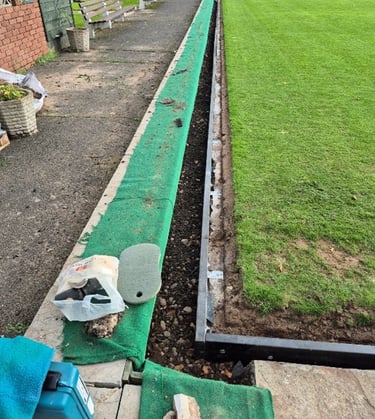
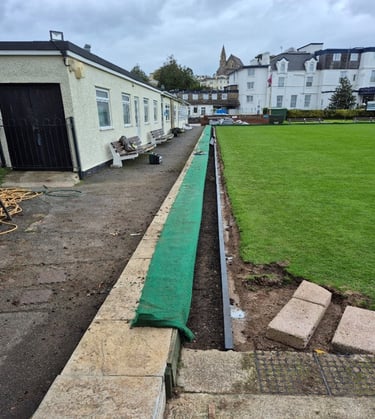

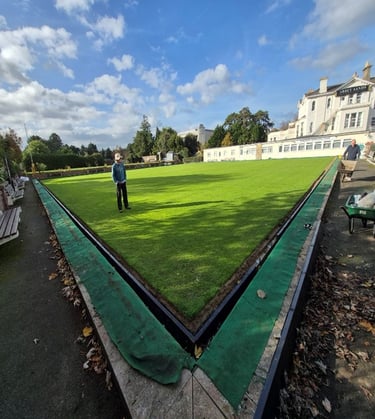
On completion of the new ditch boards being secured into place phase two of the project commenced. Having removed between 8 and 12 inches of turf and soil the area between the green and the new green edge was filled with a mix of 60/40 top dressing and the soil that had been recycled during the removal of the original turf. Overall, 120 x 25 kg bags (3 tonnes) of 60/40 soil were required to back fill the edge area. 4 dumpy bags of recycled soil were also utilised during this process. The photos below show the back fill and sowing of mixed grass and the germination process around the green (Fig 26 - 29)

In Summary
The project commenced 30 Sep 24 and was completed on 22 Nov 24. The man hours for the whole task were 230. The following members are thanked for their help during this excellent project:
Paul Levick, Keith Chesher, Keith Stowe, Richard Kiteley,
Marcel Podeur, Steve Adams, Mike Pollard, Tony Crispin
The material costs for this project were £2281.32
A donation at the start of the project was £1000
The whole project cost Torquay Bowls Club £1281.32
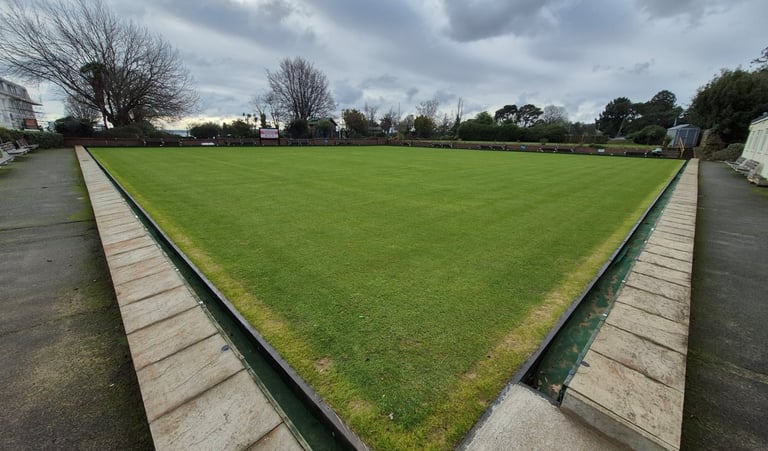
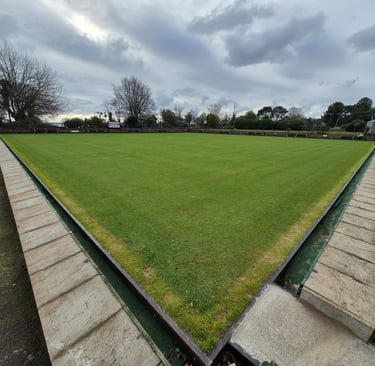
Torquay Bowling Green after cutting, 10th Jan 25
Fig 14
Fig 2
Fig 7
Fig 16
Fig 17
Contact
Send an email or get in touch for more information
01803 555123
© 2025. All rights reserved by Torquay Bowling Club.
Like us on FaceBook
PHONE
Website produced and managed by Harvian Consulting
info@torquaybowlingclub.co.uk